My name is Siân Grigg and I’m a makeup artist and hair designer. I grew up around the industry, as my mum was a makeup artist and later became Head of Costume and Makeup at BBC Wales, though I made a conscious decision to carve out my own path. I went to art college in Cardiff and then studied at the London College of Fashion. While I loved art, I realised that painting makeup on people’s faces was far more fun and sociable than painting on canvas. I had no idea where it would take me, but the career that followed has been incredible, and I feel very lucky to have had it
My first real break came while I was still at college, when I got a trainee job on Howards End, a period film. I wasn’t paid, but I worked as hard as I possibly could. I arrived before everyone else, left after everyone else and did all the jobs nobody else wanted to do. Those early jobs taught me that being hardworking, kind, and reliable really matters. If you’re prepared to look after people and do the unglamorous jobs, people remember you and want to work with you again. That approach shaped my entire career.
Many projects stand out for me. Early on, I worked on The Muppet Christmas Carol, which was a real career highlight for me, as well as Orlando. Every job built my experience, my confidence, and my network.
I absolutely love period work and ageing characters – taking someone through a long character journey. I really enjoy projects where hair and makeup play a big role in telling the story visually. I loved working on Goodbye Christopher Robin, because it had everything I enjoy creatively. I’ve also worked with Leonardo DiCaprio for 30 years, and The Aviator was a particularly interesting and challenging project. We were using techniques like flat moulds that hadn’t really been used before – technology has moved on so much, but at the time we were pushing boundaries.
The Revenant is another. The bear attack was incredibly stressful, as it was technically so complex, but I loved creating the looks at the end of the film – the frozen skin, cracked lips, ice-filled beard, weathering, and scarring. Those long character journeys are what I enjoy most.
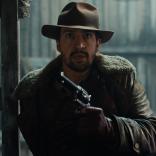
Working on Young Sherlock meant everything to me. I’ve travelled all over the world for work, but there comes a point where it’s just wonderful to be home. Being able to work on a big-budget production in Wales and still sleep in my own bed was incredibly special. I was also blown away by the level of talent here – the crews are exceptional, and Wales absolutely has the skillset to support major productions. The biggest challenge on Young Sherlock staying true to the 1870s without making it feel stuffy or old-fashioned. It’s a beautiful period, and we wanted to honour that while still appealing to younger audiences.
Wales has world-class crews, incredible locations, and strong infrastructure. We’re proving that we can handle big-budget productions. I also love the way working internationally allows you to bring skills back home – whether that’s facial hair techniques from Italy or problem-solving ingenuity from places like Romania where there might be smaller budgets and less resources.
There’s also an incredible amount of talent in Wales. I’ve rehired so many people I first met working in Wales. On Queen of Fashion, I hired around 90% of my team from Wales – some of whom I’d originally met on Young Sherlock.
Siân GriggI’m dyslexic, and I think it’s important for young people to know that dyslexia doesn’t stop you from doing well. In fact, I think it’s helped me.
Places like the London College of Fashion are still fantastic, but apprenticeships and trainee placements are equally important. On-the-job learning is invaluable, and those opportunities need to be promoted and supported. They open doors for people who might not otherwise have access to the industry. I’ve met some brilliant trainees through Welsh schemes, and I love seeing people from art backgrounds or non-traditional routes find their way into hair and makeup. Supporting diversity and access is essential for the future of the industry.
I’m dyslexic, and I think it’s important for young people to know that dyslexia doesn’t stop you from doing well. In fact, I think it’s helped me. Dyslexics are often described as being like water – finding a way around obstacles rather than going straight through them. That kind of thinking is incredibly useful in the film industry, where problem-solving is constant. I try never to focus on the problem itself, only on how to find the solution.
So, my advice to young people is simple: you need passion and talent, but you also have to be prepared to work hard and gain hands-on experience. Always do the jobs nobody else wants to do – and do them happily. That’s how you build trust. It’s also essential to create a strong visual portfolio so people can see what you’re capable of.
Like this article? Discover more interviews with talented people working across Wales’ creative industries